Here, you will find information about the institutions that build the spirit of our village – from the first steps of our youngest to the active social life of our veterans.
"Detski Svyat" (Children's World) Kindergarten – Goritsa Village Branch
“Detski Svyat” (Children’s World) Kindergarten – Goritsa Branch
A branch of “Detski Svyat” Kindergarten, Galabets Village
The village of Goritsa hosts a mixed-age group for children from 3 to 7 years old. This facility operates as a branch of the “Detski Svyat” Kindergarten based in the village of Galabets.
The kindergarten branch is conveniently located within the building of the “Hristo Botev” Primary School.
Director: Maria Dimitrova
Phone: +359 88 907 376 67
Email: cdgdetskicviat@abv.bg
"Hristo Botev" Primary School
“Hristo Botev” Primary School – History and Education
The village of Goritsa takes great pride in its rich cultural life. The roots of education here date back to 1842, when patriotic villagers laid the foundations for the first school lessons, striving to provide their children with literacy and knowledge. This early education followed traditional forms of teaching, supported by the entire community, as the pursuit of literacy flourished despite the challenges of the era.
A pivotal moment in the development of school education in Goritsa occurred in 1907. On the initiative of Dragni Grozev—a prominent educator and local public figure—the first junior high school (progymnasium) in the Pomorie district was established. This was a significant milestone, as it offered a more organized and broader educational framework, allowing children from the village and the surrounding areas to pursue a higher level of learning. This initiative solidified Dragni Grozev’s legacy as one of the most important pioneers of education in the region. At its peak, the school welcomed students from 15 neighboring villages, becoming a true center of knowledge.
The school faced numerous hardships over the years—material, social, and organizational—typical of the difficult period for Bulgarian education in the early 20th century. Nevertheless, the teachers in Goritsa remained steadfast. Through the collective efforts of the principal and the local community, a new school building was constructed in 1933, strengthening the educational infrastructure and serving generations of students.
In recognition of its long-standing connection to the community and its values, the school was named “Hristo Botev”—honoring the great Bulgarian revolutionary, poet, and public figure, a symbol of enlightenment and national revival. Today, the “Hristo Botev” Primary School continues this legacy, educating students from 1st to 7th grade, providing quality primary education, and preparing the younger generation for their future success.
Principal: Eng. Halime Tahir
Address: 60 Sv. Sv. Kiril i Metodiy St., Village of Goritsa
Phone: +359 882 598 672
Email: ou_goritsa@abv.bg
Website: https://ou-goritsa.idwebbg.com/
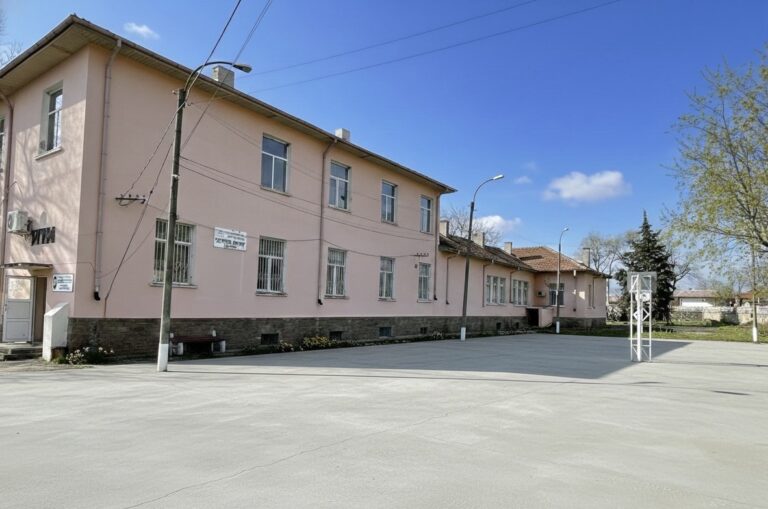
"Dragni Grozev" Pensioners' Club
“DRAGNI GROZEV” PENSIONERS’ CLUB – VILLAGE OF GORITSA
“A place for meetings, sharing, and friendship!”
Dear residents of Goritsa,
Our club’s doors are wide open to all retirees seeking pleasant company, a shared conversation, and a warm atmosphere. Here, you can:
Meet with friends over a cup of tea or coffee.
Participate in cultural events, holiday celebrations, and traditional customs.
Share experiences and hobbies – from gardening and cooking to chess and handicrafts.
Be part of the active life of our beautiful village.
“Age is just a number, but our spirit remains forever young when we are together!”
Festivities
Gemini said
Ето превод на текста, който подчертава празничната атмосфера и уважението към традициите:
🍂 Goritsa Village Feast: Tradition, Faith, and Folklore
Every year on November 8th, the village of Goritsa wakes up with a special sense of excitement. On this day, we celebrate our village fair—Arhangelovden (Archangel’s Day), dedicated to our heavenly protector, Saint Archangel Michael.
The celebration begins under the dome of the local church, where, amidst the warmth of flickering candles and prayerful silence, we give thanks for the health and prosperity of our homeland.
Following the spiritual service, the village center comes alive! The square transforms into a stage for a vibrant folklore program that tells stories through rhythm. Local talents keep the spirit of our ancestors alive, leading traditional Horo dances where we all join hands like one big family.
OTHER HOLIDAYS
Each year, the residents of the village proudly revive ancient traditions. The year begins with the celebration of Babinden (Midwives’ Day), and when the holy Christmas Eve arrives, the voices of the Koledari (Christmas carolers) echo through the streets. They visit every home, singing blessings for health and abundance.
Among the most cherished celebrations on the calendar is Trifon Zarezan—the day dedicated to the vine and the fruitful power of the earth.
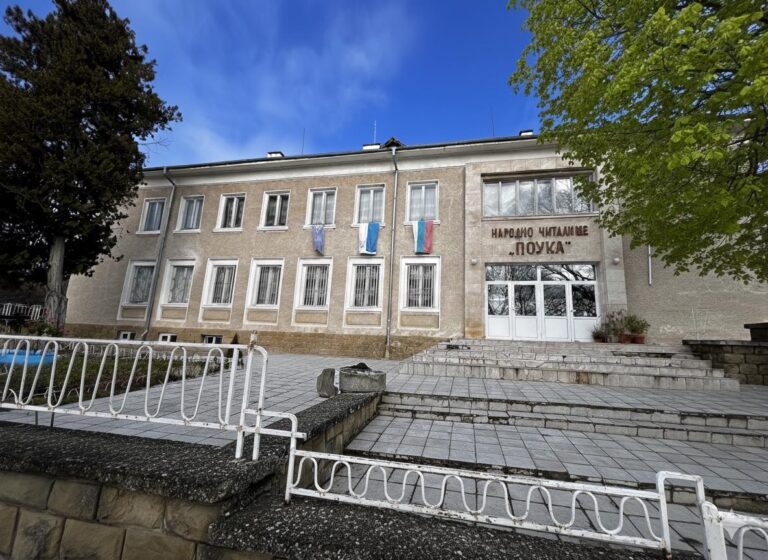
"POUKA – 1907" National Community Center
The year 1907 remains forever etched in the history of our village as a bright and memorable milestone. It was a time when the foundations of spiritual life were laid, and the spark of enlightenment was lit—a spark intended to drive away the darkness from human souls. The primary credit for this goes to Daskal (Teacher) Dragni Grozev—a man of keen intellect and a great heart, dedicated to the cause of knowledge.
The preparations for the center’s opening began as early as 1895–1898. During this period, Teacher Dragni began purchasing various literary works, arranging them in a modest library cabinet and lending them to the villagers. Despite supporting a large family with six children, he set aside funds from his meager teacher’s salary to buy books.
In 1898, Dragni Grozev attempted to officially establish a community center but failed to gain enough support. This, however, did not discourage him. He believed that sooner or later, people would realize the need for such an institution, and he did not wait for that day to come—he acted to make his dream a reality.
In the old school, built in 1892, the center’s volunteers transformed a classroom into a theater hall. For the stage and flooring, they used wooden planks from village carts; for the curtain, the local women donated their finest hand-woven rugs (chergi). These seemingly modest actions revealed a profound spiritual strength—people who were poor in possessions but rich in spirit and driven by a powerful desire to create culture for their fellow villagers.
Such examples demonstrate the spiritual thirst of our ancestors. It is hard to say when this thirst was most vivid: in 1842, when villagers gave their last grain of rye to educate their children; between 1853–1856, when the need for a church prompted two brave souls to travel to the “Sublime Porte” in Istanbul; or in 1892, when the community put their last strength into building the school. This same courage lived in the young volunteers who made theater out of rugs and cart parts.
By 1907, the village community center was finally an established fact. While it was long believed that its early years were limited to library work, memories from contemporary cultural figures later revealed that it had its own building, a stage, and a thriving amateur theater group.
The library’s role until 1919 cannot be overlooked. The collection included world classics by authors such as Zola, Pushkin, Hugo, Tolstoy, Lermontov, Balzac, Gogol, Goethe, and Botev. Although the number of enlightened people was small at the time, every page turned expanded the horizons and knowledge of the community. Teacher Dragni served simultaneously as an educator, community leader, and librarian, foresightfully guiding the reading interests of his students.
The Community Center Today
Today, the “Pouka” Community Center is a modern hub for the village:
Technology: Equipped with 3 computers (via the “Global Libraries” program), 10 laptops (a project by Pomorie Municipality), and 3 laptops (via the “Digital Clubs” project).
Library: Boasts a collection of over 14,000 volumes of literature.
Theater Hall: A venue with 350 seats for community events and performances.
Address: 61 Sv. Sv. Kiril i Metodiy St.
Secretary: Stanka Petkova
Phone: +359 892 237 348
Email: pouka.gorica1@abv.bg